Alison’s Blog
I am working on pages for a blog, but am having technical issues. In the meantime, here is a taster of my writing. It is taken from my weekly newsletter, which you can subscribe to using the button at the top of the page.
The 100-Year-Old Injury That Was Controlling My Body
"Trauma is stored in the body, not the mind. To heal, we must learn to inhabit our bodies differently."
(Bessel van der Kolk)
Old before my time
In 2018, weeks before joining The Chrysalis Effect, I went on holiday with some old friends: three families sharing an old farmhouse in the Loire in the intense heat of August. It was a joyous gathering, but looking back I am amazed at my power to push through and not ruin the holiday for everyone. Each morning I packed a holdall with everything I thought I might need for the day, before slowly bumping down the stairs on my bum when no one was looking. I knew I couldn’t climb back to my room without my heart pumping out of my chest, so couldn’t afford to leave anything behind. With hindsight, I wonder why I didn’t ask for the downstairs bedroom. Pride I suppose, and an inability to ask for what I needed.
I managed to walk slowly around the towns we visited, with lots of stops to rest. Sitting under the trees, I looked down with loathing at grotesque feet, toes like sausages and ankles that only moved in one plane, up and down like flaps. Fingers stiff and unreliable, I grasped my cool drinks tightly, afraid to fumble and smash what was not mine, what I didn’t deserve. The swimming pool was a blessed relief, and gave me respite from the heat and the sorrow of feeling so old in comparison to the rest of the party. I asked myself how I had found myself in this 80 year old’s body, but no answers came.
Sometimes, when I’m standing on top of a hill, or paddling my kayak in Loch Lomond, it is hard to connect with that ancient Alison. How have I travelled back in time to inhabit the body of a woman in her 50s, who feels like a 20 year old? It feels miraculous. It is miraculous. This week I had a new insight into that time travel and the power of my mind to literally shape my body.
Discovering the injury I never had
When I made the decision to become a wellbeing coach, protecting that miracle was a core part of setting up my business. Since beginning to work more with other people’s trauma, I set money aside each month for a massage, to release the tension I have absorbed that does not belong to me, to remind myself that I matter too. I look forward eagerly to the warm, rose scented eye-mask and hot stones.
This month, we explored the grumbling in my lower back, and I described how I have to stand slowly after a prolonged period at my desk. Temporarily, I am an 80 year-old again, unfurling like a scrumpled crisp packet. My therapist looked puzzled and quizzed me about any old injuries – none. There is absolutely no reason why my back should grumble. My 6 foot 6 inch father drilled into me from an early age that I should always stand tall and lift carefully, and his advice has carried me safely through nursing, gardening, archaeology, and motherhood.
‘Gardening. Hmm. Show me how you weed.’
I flop forward from the hips like a collapsing slide-rule, fingers on the floor, and her eyes widen in surprise.
‘Why do you do that?’
‘I don’t know. Is that not normal?’
‘I wonder why you don’t bend your knees?’
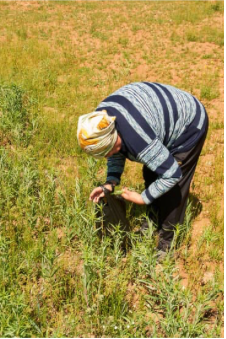
I feel a little foolish but then drop forward again into the familiar pose that my mother used to describe as ‘bottoms up among the brassicas’. It is the way that my grandmother used to garden. From my upside down vantage point I suddenly see clearly. My grandmother taught me to garden and, as a child, I would have copied her exactly without question. This is the shape I make when I weed, pick fruit, smell a crocus. She bent like this because of a knee injury when she was a small child. I bend like this now because of an accident that happened more than a hundred years ago to somebody else! Wow! It doesn’t harm my back but my hips sure don’t like it, and my knees rarely get the chance to stretch. No wonder I have such difficulty with some yoga poses.
Choosing to let go my inheritances
For a while we are caught up in professional curiosity about the transmission of patterns of movement through generations, echoing the language, the beliefs, the rituals, and the trauma we inherit. She asks me to rise from a chair and watches me brace my hands on the seat, hunch my shoulders and rock forward, my whole body tensed in anticipation of pain that isn’t there anymore. Again, as I rise, I understand. My body has not received the memo that the pain has gone and continues to brace for it. My back is not grumbling because it is injured, but because I am tensing muscles that need to be loose to rise freely.
‘Sit like Kevin the Teenager.’ she instructs.
I slump, and I hear my grandmother’s stentorian voice, ‘Young ladies don’t sit like that!’ Bog off Granny!
‘Now fling yourself up like a stroppy teen, without thinking about it, and breathe out as you do. Let your arms flop.’
I obey, smiling, ‘Whatevs!’ and find myself standing lightly on my toes, arms swinging by my side, no stiffness, no pain. Magic!
I have questioned so much about my thinking in the past seven years, but missed this physical inheritance from my illness. In 2019 I replaced my swollen, flapping, 80 year-old ankles with my current 58 year old versions, slim(mer), fully mobile, pain free. I did this simply through the daily practise of sitting on the edge of my bed each morning and going through a full set of stretching exercises. I played with my neglected feet, exploring how they could move and gently challenging them. I calmed my thundering, palpitating heart through trauma therapy and the choice to walk away from my birth family into the love of the new family I have created. In the joy of my ability to walk and climb freely I didn’t notice that I had carried old patterns of movement with me, from the weeding pose of my grandmother to the tense, slow moves of illness. Now I have seen and understood this echo of illness, I can choose to do things differently. I have swapped the sofa for my physio ball while I watch TV, and now gently and playfully bounce, stretching hips and knees without thought. It feel good. I make myself laugh when I rise from my office chair, harumphing like Kevin. My mission for this coming month is to move more freely, consciously and joyfully. That reminds me. It’s time to go for my daily bounce on my mini-trampoline. Wheeee!
Tips for the week.
As I wrote in last week’s newsletter, noticing lies at the heart of recovery. It opens the spaces for making different choices. Here are some tips for noticing how you hold and use your body.
How are you sitting as you read this email?
Are you slumped and tense like an old person expecting pain, or upright, relaxed, loose?
What is in your body right now?
Do a quick scan from your head to toes, just noticing any tension, contact, temperature, movement, any emotions that may arise as you check in. Let them be there just as they are for a few moments.
Stand up, noticing how you do this. Try tensing and relaxing each part of your body, noticing the relaxation that follows the tension and any other changes that happen.
Now play with your posture – hunch like an old woman, stand like a superhero, wiggle like a belly dancer, stretch like a tree and wave in the wind. How do these movements change what you feel in your body, how you feel emotionally?
In recovery, movement is not all about exercise, self-discipline and pacing. It’s about reconnecting with your body, learning to love and listen to it, but also to challenge and play with it and to ease it back into a time when moving was fun.